Short answer: a marketing bottleneck is the one step in your marketing that limits everything after it. It might be a homepage that doesn’t explain the offer, leads that wait a day for a reply, or quotes nobody follows up on. Until that step is fixed, more traffic, more posts or a bigger ad budget won’t produce many more customers.
If your marketing takes a lot of effort without much return, you’re not alone. Most of the growing businesses we work with aren’t short on ideas. They’re stuck because one or two parts of the system are slowing everything else down. Here’s how to find your bottleneck, the seven we see most often, and the order to fix them in.
How to find your marketing bottleneck
Follow one lead from the first time they find you to the day they pay you, and count how many people make it through each step. The bottleneck is the step where the numbers drop much further than they should.
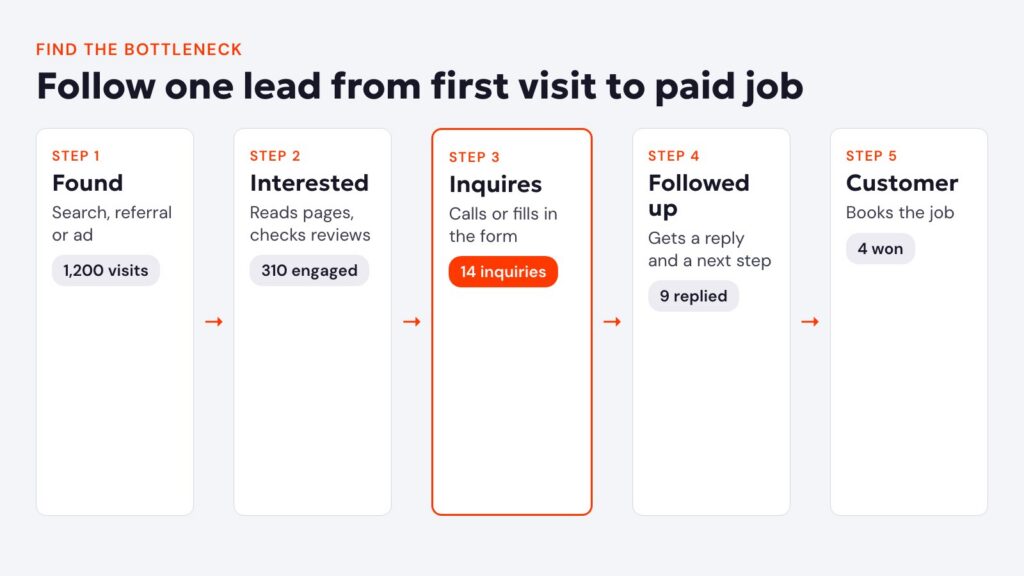
In the example above, plenty of people find the business and read its pages, but very few get in touch. Spending more on ads would just push more people into the same narrow step. The fix is on the website: a clearer offer, one obvious next step and a form that works on a phone.
You don’t need perfect data to do this. Rough numbers for the last 90 days are enough:
- Found: visits from Google Analytics, plus calls and views from your Google Business Profile.
- Interested: visits to service, pricing or case study pages.
- Inquired: form fills, calls and booked meetings.
- Followed up: inquiries that got a reply and a clear next step.
- Won: new customers or signed jobs.
The seven most common marketing bottlenecks
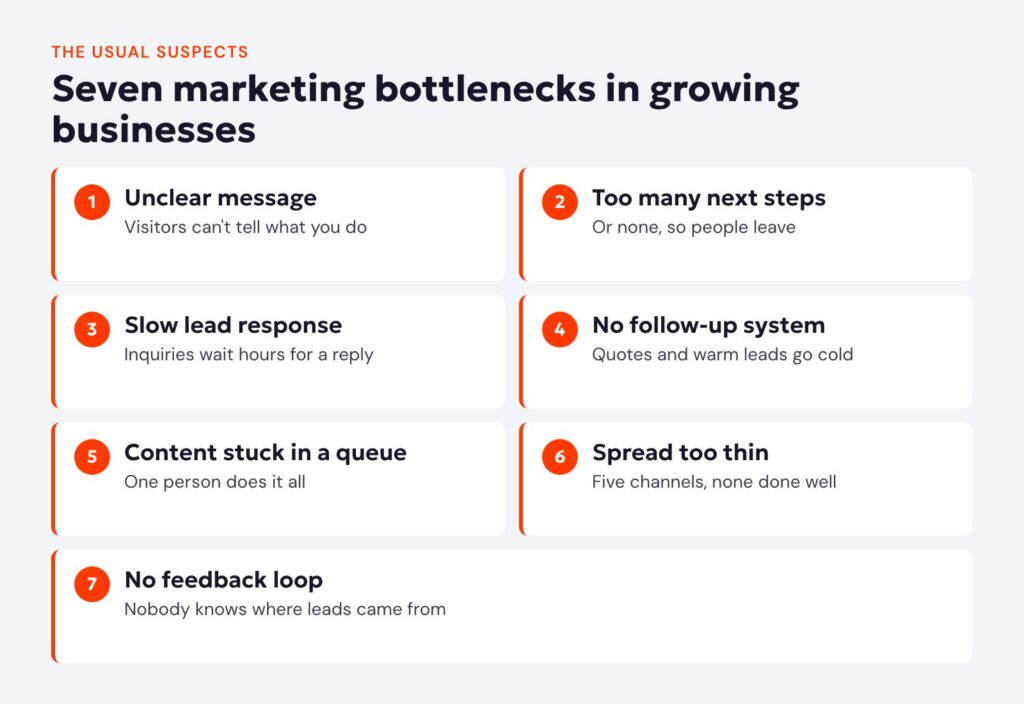
1. An unclear message
The symptom: people visit your site or see your ad, but don’t really get it. They won’t dig to find out what you do. If the homepage doesn’t quickly answer who you help, what you offer and why it matters, they leave.
The fix: rewrite the headline around the result your customer gets, cut the buzzwords and make the main offer obvious within five seconds. Test it by showing the page to someone outside the business and asking them what you do.
2. Too many next steps, or none at all
The symptom: people browse but don’t act. Five competing buttons cause hesitation, and a page with no clear next step is a dead end.
The fix: give each page one main action and say exactly what happens next: “Book a 20-minute call”, “Request a quote”, “Download the checklist”. Remove the distractions.
3. Slow lead response
The symptom: leads come in, but by the time someone replies, the prospect has already talked to a competitor. This is often the costliest bottleneck because you’ve already paid to get those leads.
The fix: set up an instant confirmation for every form and a missed-call text back for calls you can’t answer, and set a response-time target the team can meet.
4. No consistent follow-up
The symptom: quotes go out and nothing happens. Warm leads go cold because follow-up relies on someone remembering.
The fix: put every lead in one pipeline with automatic reminders, and write a short follow-up sequence for quotes and proposals. One well-timed check-in often revives a deal. Our guide to fixing your follow-up system before spending more on ads goes into detail.
5. Content stuck in a queue
The symptom: the blog, case studies and social posts depend on one person who also has a day job. Drafts sit waiting for approval, and nothing ships for weeks.
The fix: agree a simple publishing rhythm, give one person the final say on approval and use templates for recurring pieces. If the real constraint is capacity, that’s the gap an on-demand marketing team is built to fill.
6. Spread across too many channels
The symptom: you’re posting, emailing, updating listings and adjusting ads, but none of it is done well enough to work.
The fix: pick the one or two channels that actually produce customers, do them properly and pause the rest. You can always add channels back once the core ones are working.
7. No tracking or feedback loop
The symptom: you’re spending time and money, but nobody can say with confidence which efforts produced the last ten customers.
The fix: set up conversion tracking for calls and forms, record the lead source on every inquiry and review a short dashboard monthly. Track fewer things, and track them well. Our guide to SEO metrics that matter covers what to watch on the search side.
Which bottleneck should you fix first?
Start with the earliest step that’s losing the most people. A business with a clear website but slow follow-up should fix follow-up first. A business whose phone rarely rings should look at the message and the website before anything else.
Two rules of thumb:
- Fix what happens to leads you already have before buying more. Slow response and missing follow-up waste money you’ve already spent.
- Fix one bottleneck at a time and measure again. When one step improves, the bottleneck moves to the next one. That’s progress.
If you want a structured way to look at everything at once, try our one-day marketing audit. If the problem is the website itself, start with the seven signs your website is costing you customers.
Need a hand?
MassMonopoly’s on-demand marketing team works through bottlenecks like these every week, from rewriting service pages to setting up follow-up in Growth Hub. You get a senior team on a monthly plan without hiring one.