Short answer: a digital marketing strategy for a growing business is a short list of choices: who you’re trying to reach, what you want them to do, and the few channels and systems that will get them there. For most businesses that means a website that converts, visibility in Google, Maps and AI answers, fast follow-up on every lead, proof buyers can trust, and reporting tied to revenue. Get those working together before adding more channels.
Most marketing advice is a list of tactics: post more, run ads, start a newsletter, try a new platform. Tactics aren’t the problem. The problem is doing them without deciding what matters first. This guide covers how to build a strategy that fits a growing business, the core system it should rest on, and how to choose channels for your type of business.
Start with the buyer and the offer
Before any channel decision, write down three things in plain language:
- Who buys. The two or three types of buyer that bring in most of your revenue, or the revenue you want.
- What they need to believe. The questions and doubts they have before they contact you.
- Why you. The specific reason to choose you over the alternatives, including doing nothing or doing it in-house.
If the team can’t agree on these, no channel will fix it. Messages get vague, campaigns target everyone, and results are hard to read.
The core system every growing business needs
Channels come and go. The system underneath them is what turns attention into revenue. These six pieces need to work together:
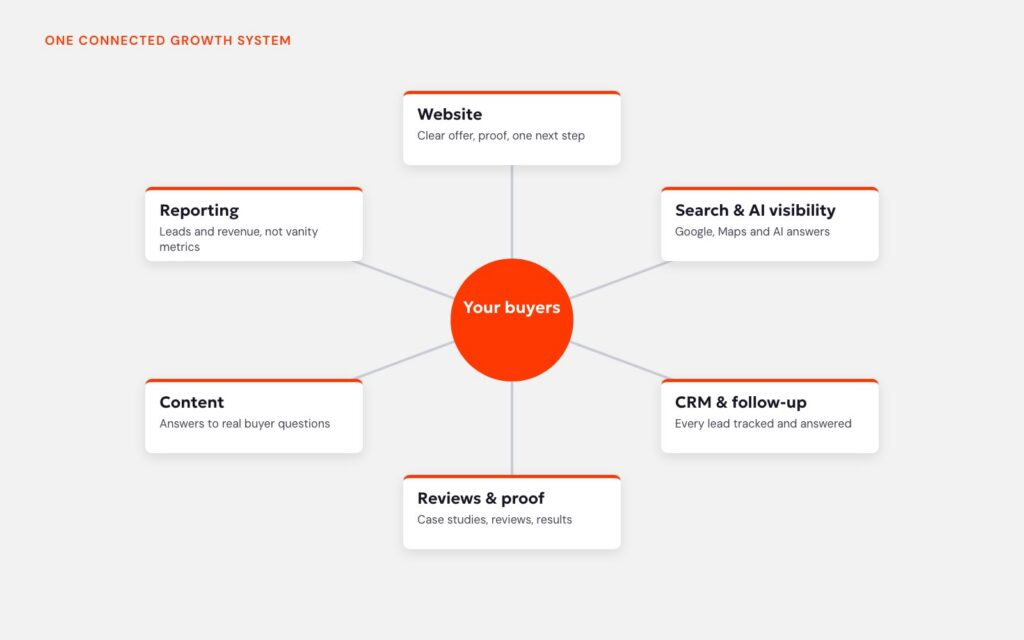
- A website that converts. It says clearly who you help and what to do next, and puts proof near every call to action. See why good website design matters.
- Search and AI visibility. Buyers look for you in Google, Google Maps and increasingly in AI tools such as ChatGPT. Our guide to modern SEO best practices covers how these fit together.
- CRM and follow-up. Every call, form and message is captured, answered quickly and followed up until it’s won or closed.
- Reviews and proof. Case studies, reviews, results and recognizable clients, kept current.
- Content that answers real questions. Articles, guides and pages built around what buyers actually ask, not a publishing quota.
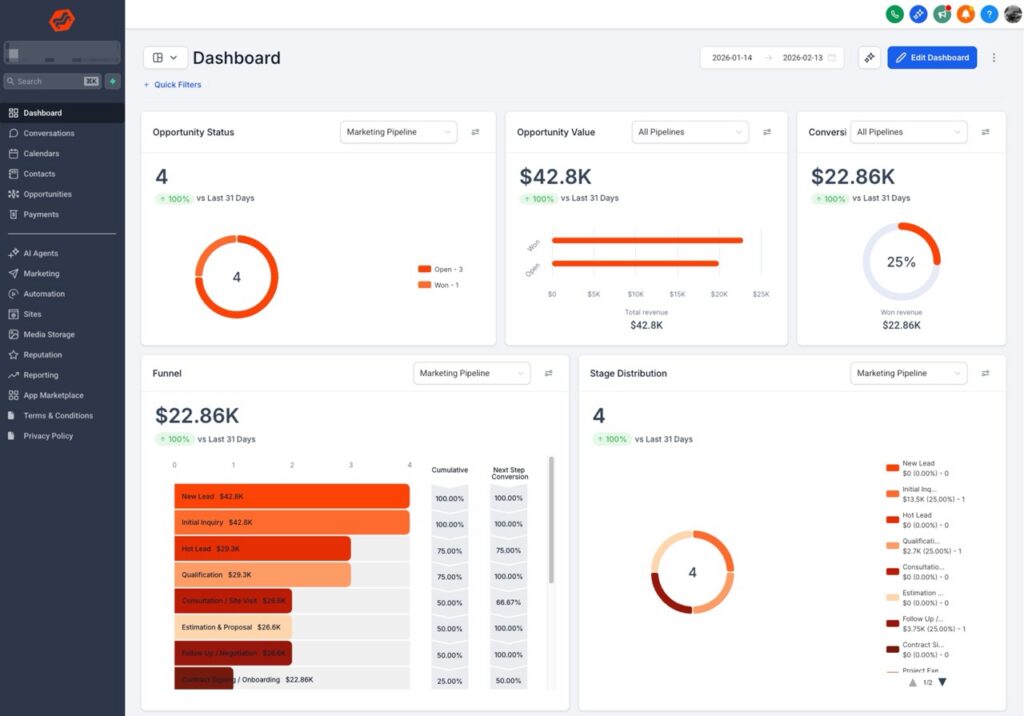
- Reporting tied to revenue. Leads, booked calls, opportunities and sales by source, not just traffic and likes.
Choosing channels for your type of business
Once the system is in place, add the channels your buyers actually use. A few patterns we see often:
Manufacturers and B2B companies
Long buying cycles and several decision makers. Search and detailed product or capability pages matter, along with case studies, technical content, trade shows, LinkedIn and sales materials that buyers can pass around. A website built for engineers, buyers and executives at once is often the biggest lever.
Contractors and home services
Fast, local decisions. Google Business Profile, reviews, a mobile-friendly site and answering the phone come first. Paid lead platforms and Local Services Ads can fill gaps but shouldn’t be the whole plan. Our Google Business Profile guide for contractors is a good starting point.
Professional services
Trust and expertise decide the deal. Clear service pages, thought leadership, referrals, LinkedIn and a site that shows the people and their experience tend to outperform heavy ad spend.
Healthcare and life sciences
Accuracy, compliance and credibility matter more than volume. Specialized content, proof from recognizable organizations and careful messaging for each audience carry the most weight.
Digital marketing best practices that hold up
- Fix conversion before buying more traffic. If the site converts poorly, more visitors just costs more.
- Give each campaign one goal and one measure. “Brand awareness” is hard to judge. “Booked consultations from LinkedIn” isn’t.
- Follow leads up quickly. Slow responses lose deals the marketing already paid for.
- Test one thing at a time. Change a headline, an offer or an audience, and measure the result before changing the next thing.
- Keep proof current. Old case studies and stale reviews quietly undermine new campaigns.
- Review monthly, adjust quarterly. Look at what produced revenue, cut what didn’t, and put more behind what did.
Get more from the platforms you already have
Before adding a new channel, audit the ones you’re paying for or already own: your Google Business Profile, website, CRM, email list, ad accounts and analytics. Most growing businesses find quick wins here, such as an unclaimed listing, a form that emails nobody, an email list that hasn’t heard from you in a year, or ad campaigns still targeting last year’s offer.
A 90-day starting plan
- Days 1 to 30: define buyers and offer, set up tracking from lead to sale, fix the biggest website conversion problems and make sure every lead gets a fast reply.
- Days 31 to 60: strengthen search visibility for your main services, refresh proof and case studies, and launch one focused campaign with a single goal.
- Days 61 to 90: review what produced leads and revenue, double down on the best channel, and plan the next quarter.
Who should run it?
A strategy needs someone senior enough to set priorities and enough hands to carry them out. Growing businesses usually choose between hiring, an agency, an on-demand team or a fractional CMO. We compare the options in agency vs. in-house vs. on-demand marketing.
Need a marketing team without hiring one?
Our On-Demand Marketing team gives growing businesses senior strategy and hands-on execution across websites, SEO, content, CRM and reporting, without building a full in-house staff.