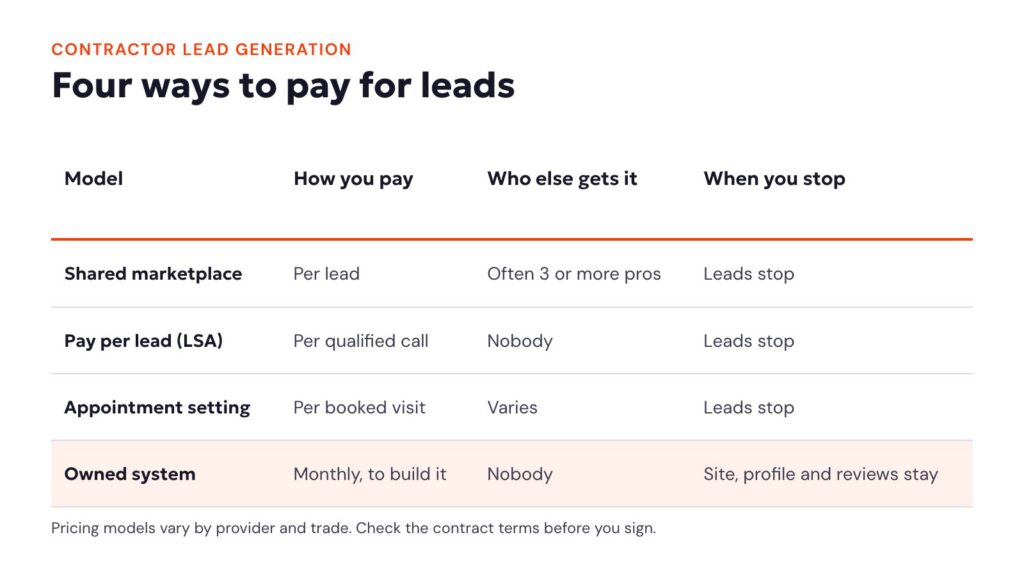
Short answer: contractor lead generation services come in four main types: shared lead marketplaces, pay-per-lead ads, appointment setting and an owned lead system built on your website, Google Business Profile and reviews. Paid leads can fill the calendar quickly, but they stop when you stop paying. The best long-term choice for most contractors is to own the core system and use paid leads to fill gaps.
Most contractors have tried at least one lead service. Some work for a while. Many end up paying for contacts that several other companies have already called. Here’s how the main types of contractor lead generation work, what to ask before you sign anything and how to judge whether a service is worth the money.
The four types of contractor lead generation
1. Shared lead marketplaces
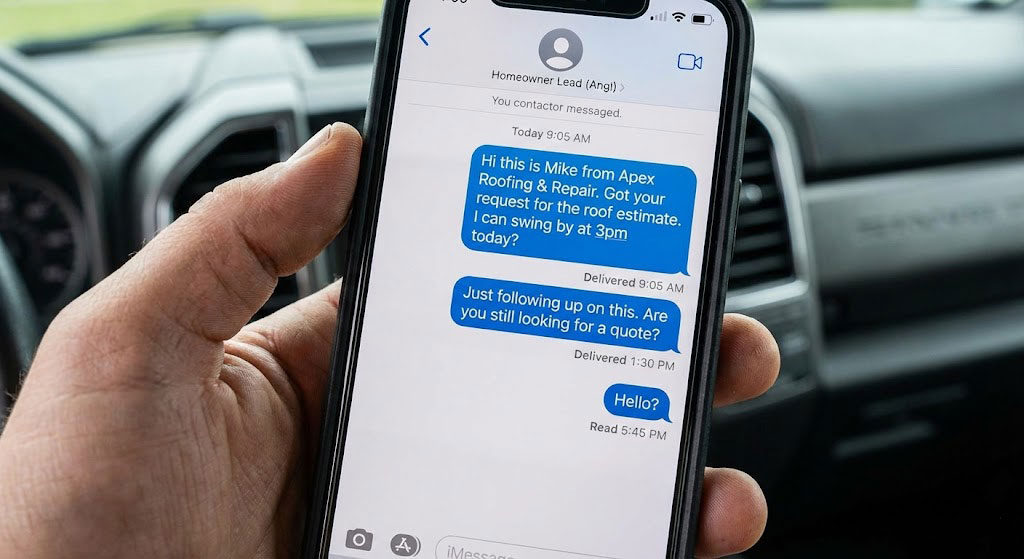
Sites like Angi, HomeAdvisor and Thumbtack sell homeowner requests to contractors. They’re quick to start, and in a slow month they can fill gaps. The catch is that the same request often goes to several contractors at once, so you’re paying for the chance to compete, and the fastest caller usually wins. Our comparison of HomeAdvisor and Angi covers what pros pay and how lead credits work.
2. Pay-per-lead ads
Google Local Services Ads put you at the top of the results with a Google Guaranteed or Google Screened badge, and you pay per qualified lead rather than per click. The leads are exclusive to you, which is a big step up from shared marketplaces. When the budget stops, so do the calls. See Angi vs. Thumbtack vs. Google LSAs for how they compare on cost per booked job.
3. Appointment setting
Some companies run ads and call the leads for you, then charge per booked estimate. It can work for high-ticket trades, but quality varies widely. Read the contract closely: what counts as a booked appointment, and can you dispute no-shows?
4. An owned lead system
This is lead generation you build rather than rent: a website that turns visits into calls, a complete Google Business Profile, a steady flow of reviews, and follow-up that answers every inquiry. It takes longer to build, but the leads are yours, and the website, profile and reviews keep working when you stop spending.
What to ask a lead generation company before you sign
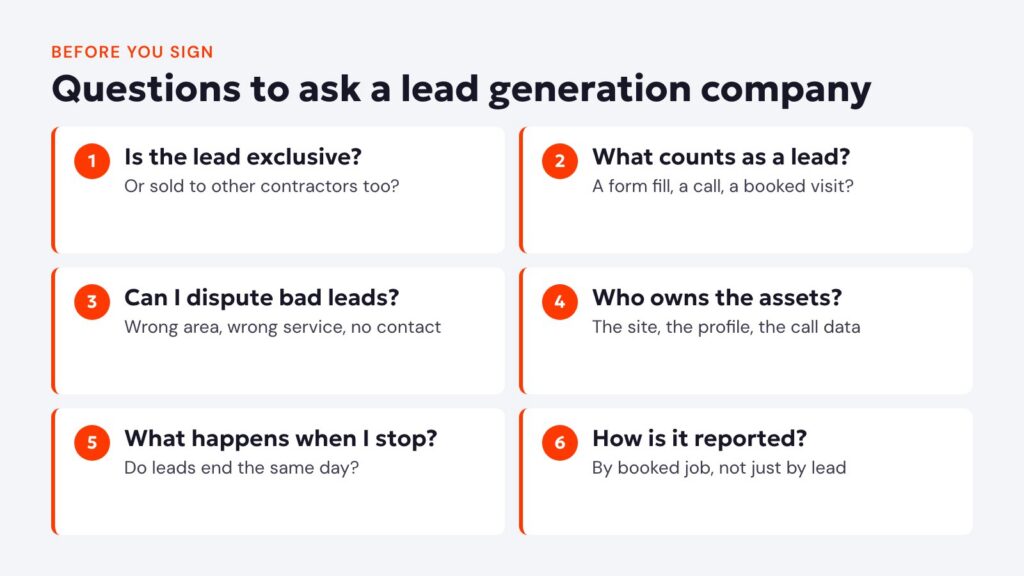
- Is the lead exclusive? If it’s sold to other contractors too, assume you’ll compete on speed and price.
- What counts as a lead? A form fill, a phone call over a certain length or a booked visit are very different things to pay for.
- Can I dispute bad leads? Wrong service area, wrong trade or no working phone number should be credited back.
- Who owns the assets? If the company builds a website or tracking number for you, find out whether you keep it when you leave.
- What happens when I stop? With most paid services, leads end the same day.
- How is it reported? Ask for results by booked job and revenue, not just the number of leads.
How to tell if a lead service is worth it
Cost per lead is the wrong number to compare. A cheap lead that never books costs more than an expensive lead that does. Track every lead source for 30 to 60 days and work out:
- Cost per booked job: total spend divided by jobs booked from that source.
- Close rate: how many leads from that source became paying jobs.
- Average job value: some sources bring small repairs, others bring full replacements.
Our guide to contractor marketing budgets walks through the math, including how much work your crew can actually take on, and our contractor marketing scorecard shows how to track cost per lead, booking rate and close rate together.
Why most contractors should own the core system
Paid leads are a tool, not a strategy. The contractors with the steadiest pipelines usually get most of their work from people who found them directly: on Google Maps, through their website, from a referral or from a past customer. That depends on things you own:
- A website that converts, with clear services, service areas, project photos and a visible phone number.
- A strong Google Business Profile with the right categories, real photos and regular updates.
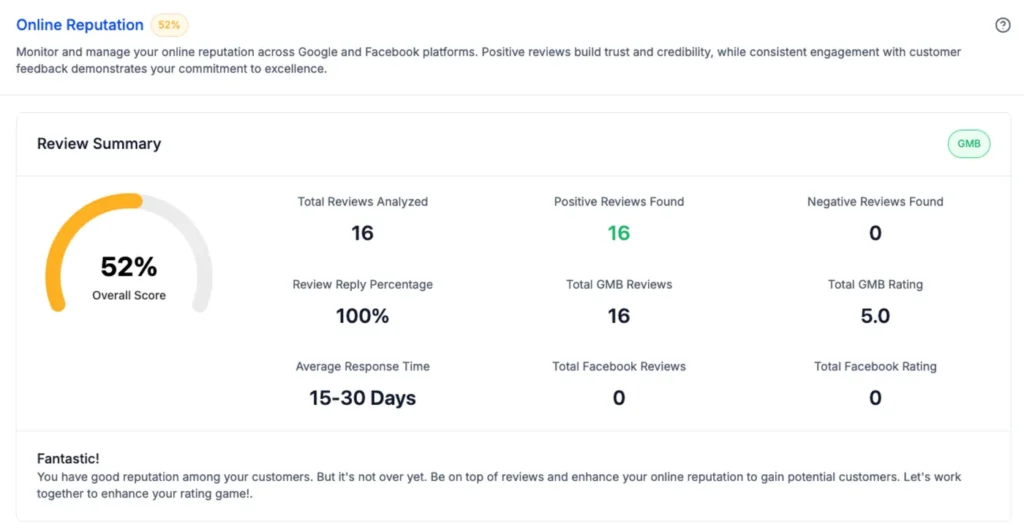
- A review process that asks every customer when the job is done. Here’s how to get more contractor reviews.
- Fast follow-up, including a missed-call text back and reminders on open estimates.
Once that foundation is working, paid leads become a way to fill quiet weeks rather than the thing the business depends on.
For contractors
That owned system is what our contractor marketing services build: the website, Google Business Profile, reviews and follow-up, managed for you month to month. Start with a free Contractor Blueprint to see what to fix first.